

Short answer: bolt pattern, offset and center bore only prove that a wheel will bolt onto the hub — they say nothing about whether the brake caliper will fit inside it. To confirm brake clearance, measure how far the caliper protrudes from the hub mounting face and how far its outer edge sits from the axle center, then compare both against the wheel’s spoke clearance and barrel inner diameter. A printed clearance template or a clay-strip test is the only reliable confirmation, and a static gap of at least 3 mm everywhere — 5 mm or more on track cars — is the usual working minimum.
Why a Correct Bolt Pattern Still Rubs the Caliper
Two wheels with identical 5×112, 66.6 mm bore and ET35 can have completely different internal geometry, because the dimensions that matter live inside the wheel. Interference shows up in three ways: spokes touching the caliper face, the caliper touching the barrel as the wheel rotates, or a balance weight fouling something at full lock. All three are measurable before an order is placed.
The Four Measurements That Decide Brake Clearance
Two of these numbers belong to the brake, two belong to the wheel.
| Measurement | What it describes | Typical values (commonly quoted) |
| Axial caliper protrusion | Distance from the hub mounting face to the outermost surface of the caliper body | 55–75 mm for sliding calipers; 75–110 mm for large opposed-piston calipers |
| Caliper radial height | Maximum distance from the axle center to the outer edge of the caliper | Rotor radius plus 35–55 mm of caliper body |
| Spoke clearance at caliper radius | Gap between the caliper outer face and the rear face of the spoke at the caliper’s angular position | 5–30 mm on high-disc designs; close to zero on deep-concave designs |
| Barrel inner diameter | Inside diameter of the rim well where the caliper and disc pass | Typically 25–35 mm smaller than the nominal bead-seat diameter |
These are planning values, not guarantees. Barrel profiles, spoke sections and caliper castings all vary between suppliers, so the final check belongs against the actual rim drawing or a physical template.
How to Measure Caliper Protrusion on the Vehicle
Fifteen minutes per corner with the car on stands:
- Remove the wheel and clean the hub mounting face so the straight edge sits flat.
- Bridge a steel rule across the hub face, clear of the studs or bolt holes.
- Measure from that rule to the outermost point of the caliper — top, middle and bottom of the body — and keep the largest reading.
- For radial height, halve the rotor diameter and add the caliper body height above the rotor edge. A 380 mm rotor puts the caliper edge at roughly 225–245 mm from the center.
- Repeat at the rear axle, where an integrated parking brake motor commonly adds 10–15 mm of protrusion.
Photograph each measurement with the rule in frame. A supplier who can see the caliper shape, rotor size and measured gap can usually confirm or reject a spoke profile without a second round of questions.
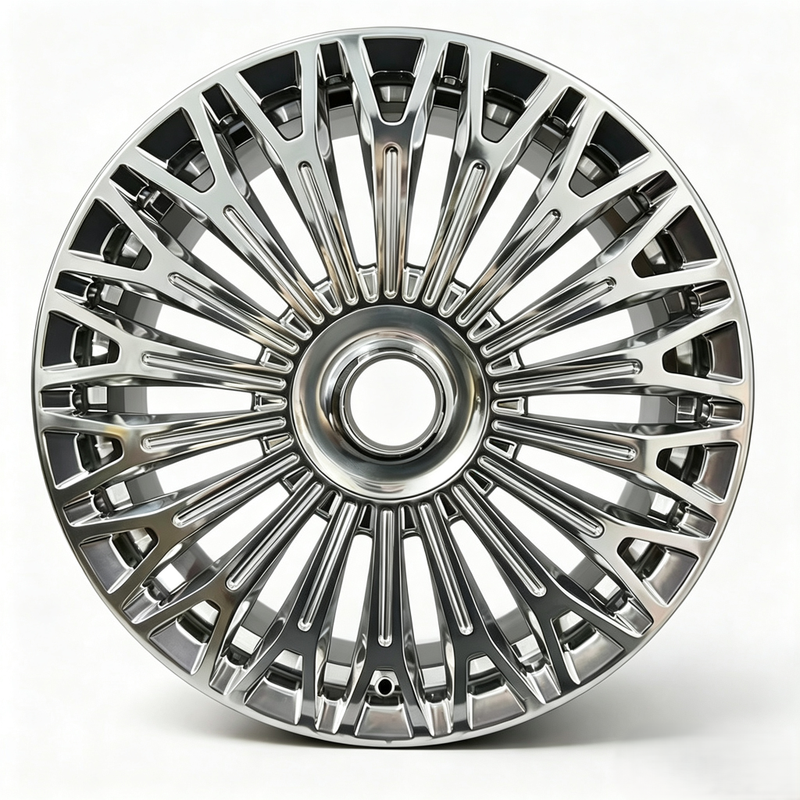
Reading Spoke Profile: High Disc, Deep Concave, and Pad Height
Spoke clearance is not one number printed on a wheel: it changes with radius. Three features control it.
Pad height
The pad is the thick section around the bolt holes where the spoke meets the hub. A tall pad pushes the spokes outboard, away from the caliper; a shallow pad pulls them inboard, toward it. On multi-piece wheels the centre disc is a separate forging, which is why the same rim half can be built high-pad or low-pad.
Spoke curvature
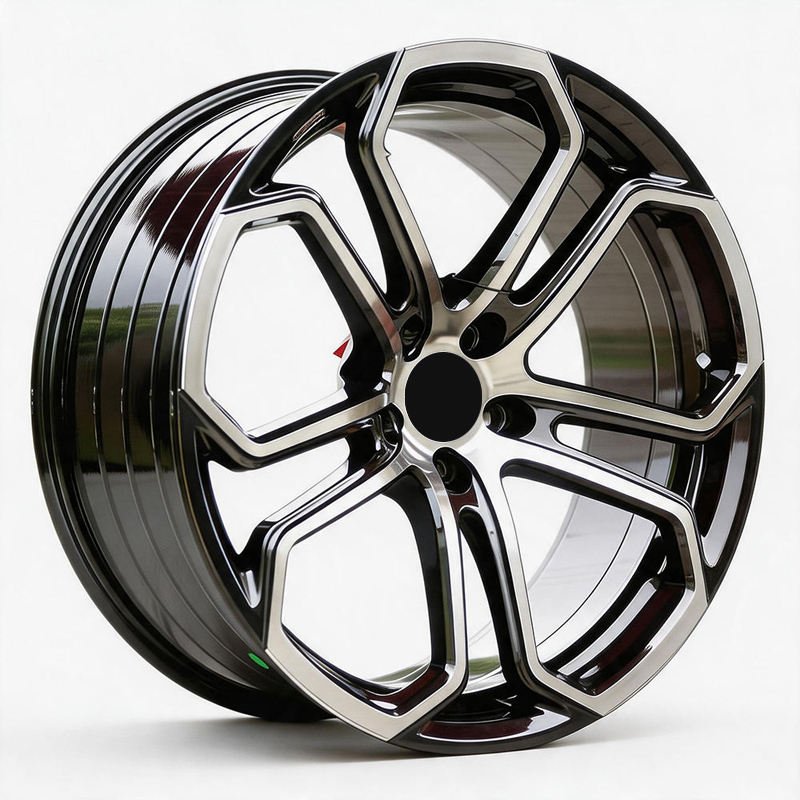
Deep-concave designs curve the spokes inboard as they approach the hub — exactly where a large caliper sits. A wheel that looks generous at the rim edge can be tightest at 230–250 mm from the center, so always check at the caliper radius rather than at the lip.
Spoke count and thickness
Fine multi-spoke patterns usually clear a caliper more easily than five thick spokes, because each spoke presents a smaller section at the caliper’s angular position.
Barrel Inner Diameter vs Rotor Diameter
Even when the spokes clear, the caliper still has to pass through the barrel as the wheel turns.
| Nominal wheel diameter | Barrel inner diameter (typical) | Rotor sizes that usually fit with margin |
| 18 in | 425–435 mm | up to 365–380 mm |
| 19 in | 450–460 mm | up to 380–400 mm |
| 20 in | 475–485 mm | up to 400–410 mm |
| 21 in | 500–510 mm | up to 410–420 mm |
Two details catch buyers here. The drop centre is smaller than the rest of the well, and some barrels step rather than taper. Adhesive balance weights are also 3–5 mm thick and sit on the inner barrel, where the caliper passes: 8 mm on paper can become 3 mm once the wheel is balanced.
Offset, Spacers and the Clearance Chain
Offset moves the whole wheel, and with it every internal clearance. Reducing offset by 10 mm pushes the wheel 10 mm outboard, which normally adds roughly the same axial gap between spoke and caliper — at the cost of moving the tire closer to the arch and changing scrub radius. Increasing offset does the opposite: the wheel tucks in and the spokes move toward the caliper.
A 3–5 mm slip-on spacer is normally safe on a hub-centric hub provided the studs or bolts still give full thread engagement. From 10 mm upward, longer studs are generally required, along with a spacer carrying its own hub-centric lip. Minimum engagement is commonly quoted as six to seven full turns.
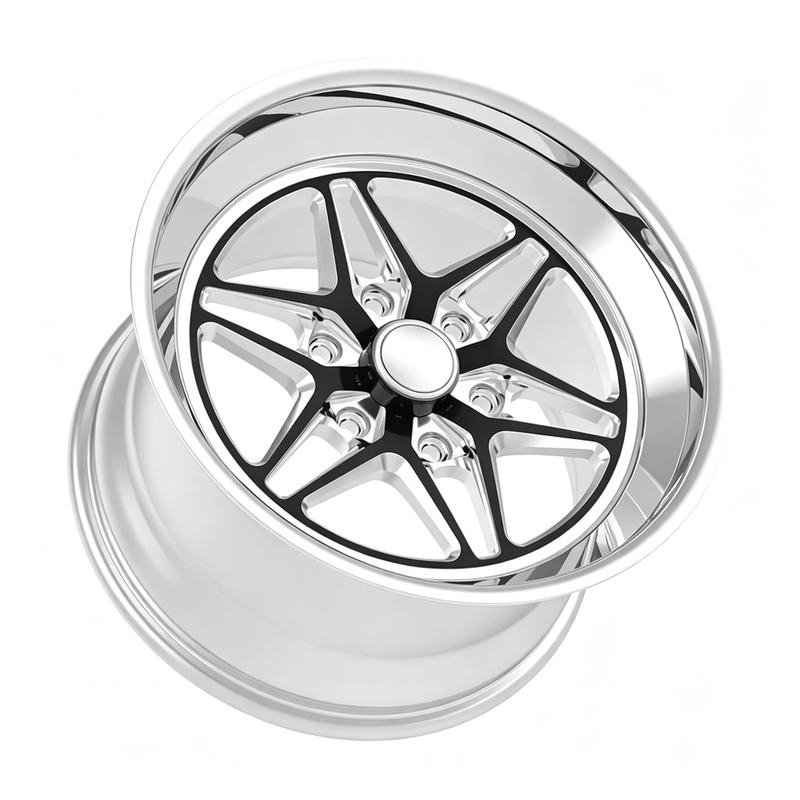
Multi-Piece Wheels: Where the Numbers Change
Two-piece and three-piece wheels are assembled from a centre disc and one or two rim halves, each specifiable separately. That adds three variables: centre disc pad height, inner rim-half profile, and the position of the assembly bolts on the outer lip. Reverse-lip and step-lip construction also shift the spoke plane relative to the mounting face. For a big-caliper build, settle the high-pad centre and the rim half with the largest inner well before discussing finish.
Two Wheels and Heavy Vehicles
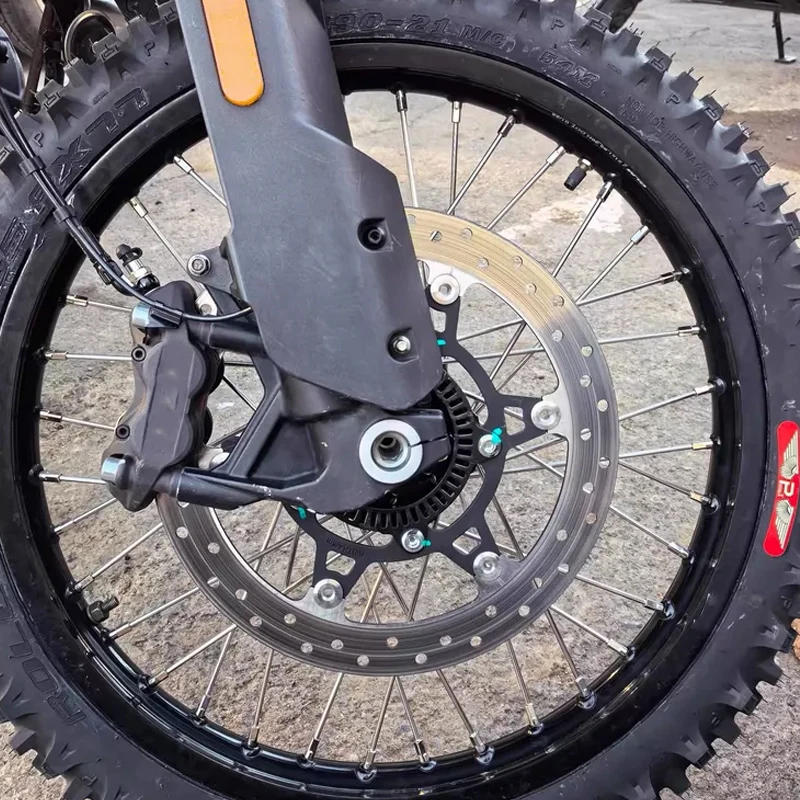
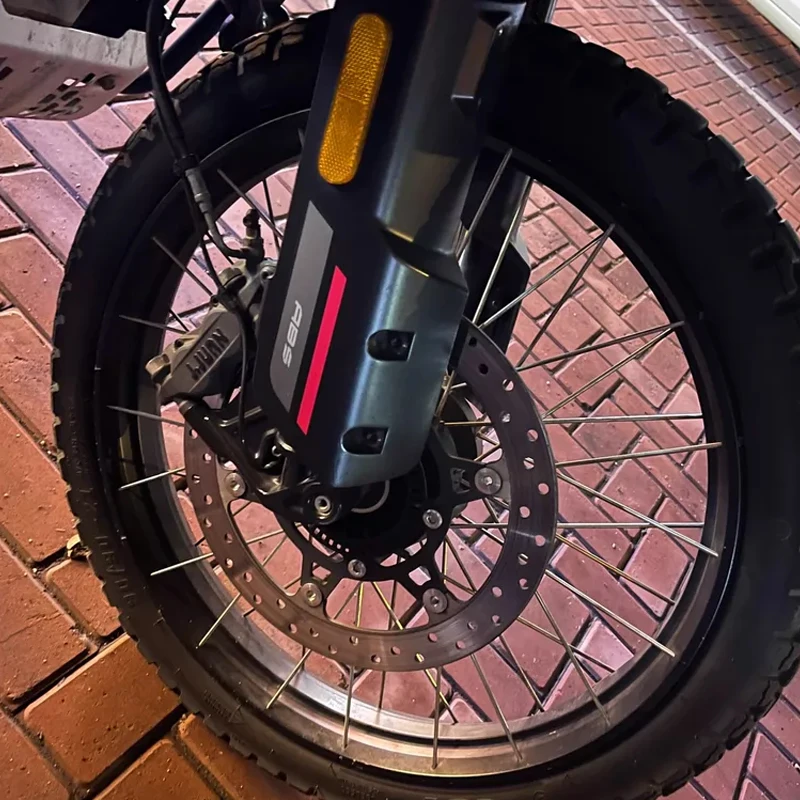
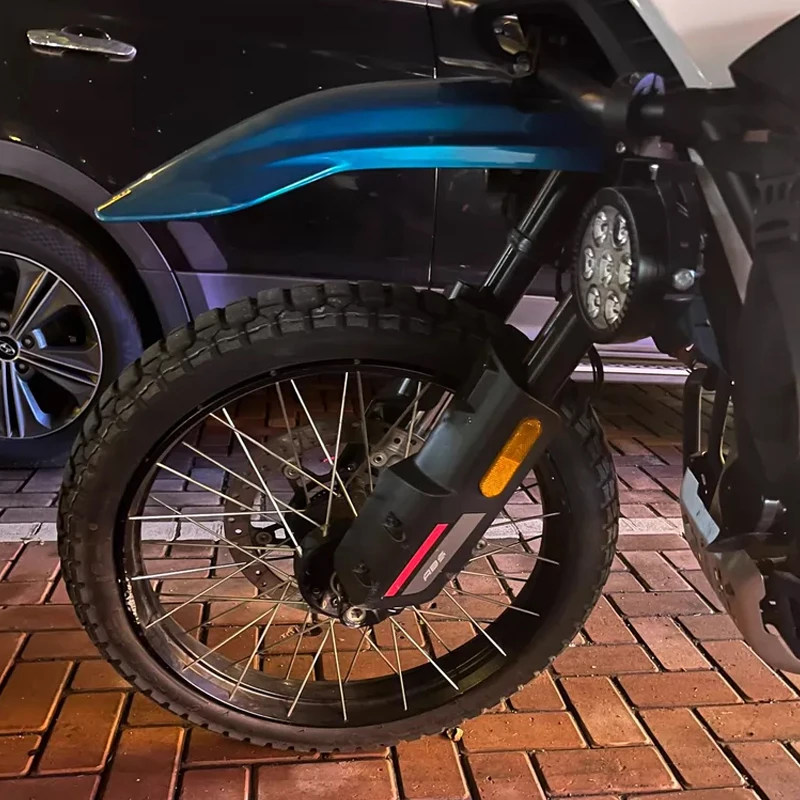
Laced motorcycle wheels add their own constraint: spoke heads and nipples intrude into the well, and a caliper that clears the rim edge can still touch a spoke under load. Check clearance after truing, and confirm disc offset at the same time. Our off-road motorcycle spoke rims are built to order, so hub width and disc spacing are matched to the caliper. Truck and bus wheels follow different rules — drum diameter, dual-wheel spacing, hub-piloted versus stud-piloted mounting — so load rating and offset usually matter more than clearance; the truck and bus wheel range lists both per fitment.
A Pre-Order Checklist
- Vehicle details: model year, chassis code, front and rear axle, any brake or suspension upgrade already fitted.
- Brake specification: rotor diameter and thickness, caliper type and piston count, radial or axial mounting.
- Measured caliper protrusion and maximum radius, with photographs showing the rule in frame.
- Wheel size and offset, plus the intended tire size — sidewall and rim protector add width at the flange.
- Wheel drawing or template showing barrel inner diameter and spoke section at the caliper radius.
- Planned spacers, stud or bolt length, and whether the car will see track use.
Without those numbers a supplier can only quote a wheel that fits the bolt pattern. Supplying them turns a guess into a confirmed fitment — the same discipline behind every forged wheel and spoke wheel order, and the reason our guide to PCD, offset and center bore sits alongside this one.
Get a Fitment-Checked Quote
Send your brake measurements, rotor size and photos with a rule in frame. We will confirm spoke profile and barrel clearance before production, and tell you honestly if a design will not clear your caliper.
- WhatsApp +852 55709471 (https://wa.me/85255709471)
- Correo electrónico: info@tuhaoauto.com
- Contact page: https://tuhaoauto.com/contacts/