

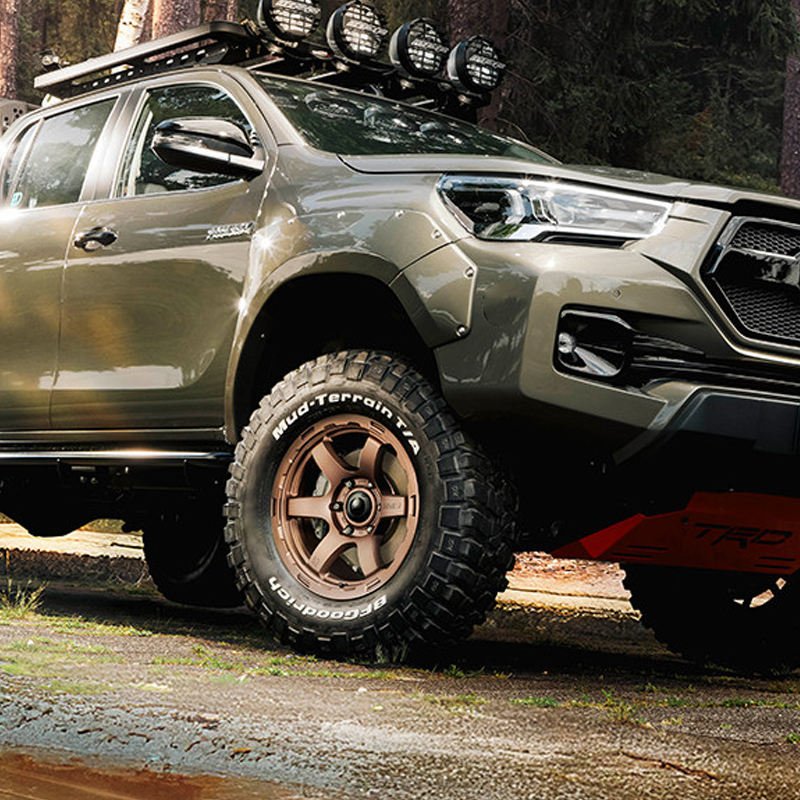
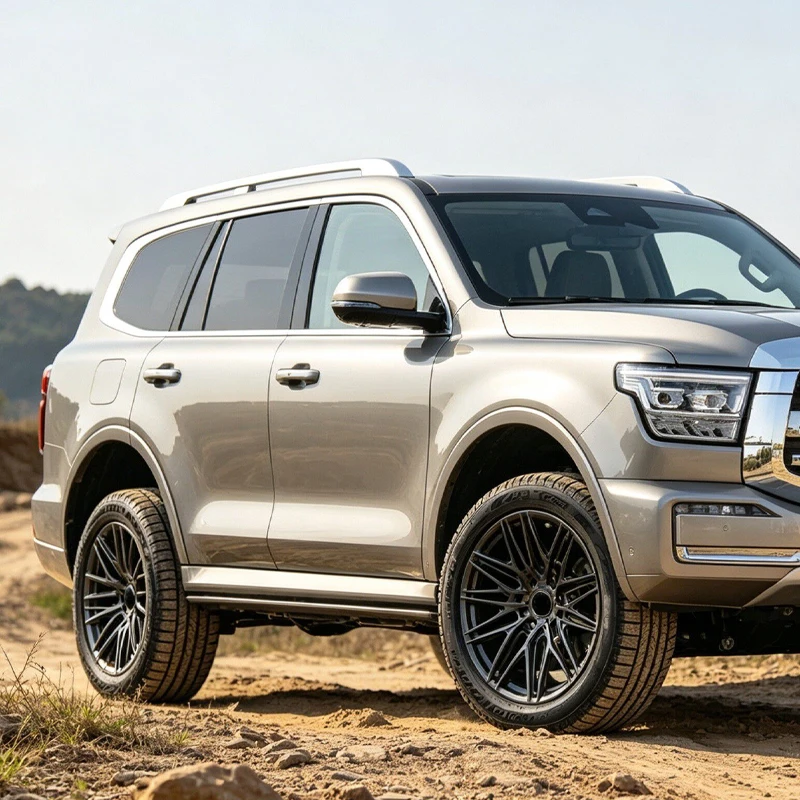
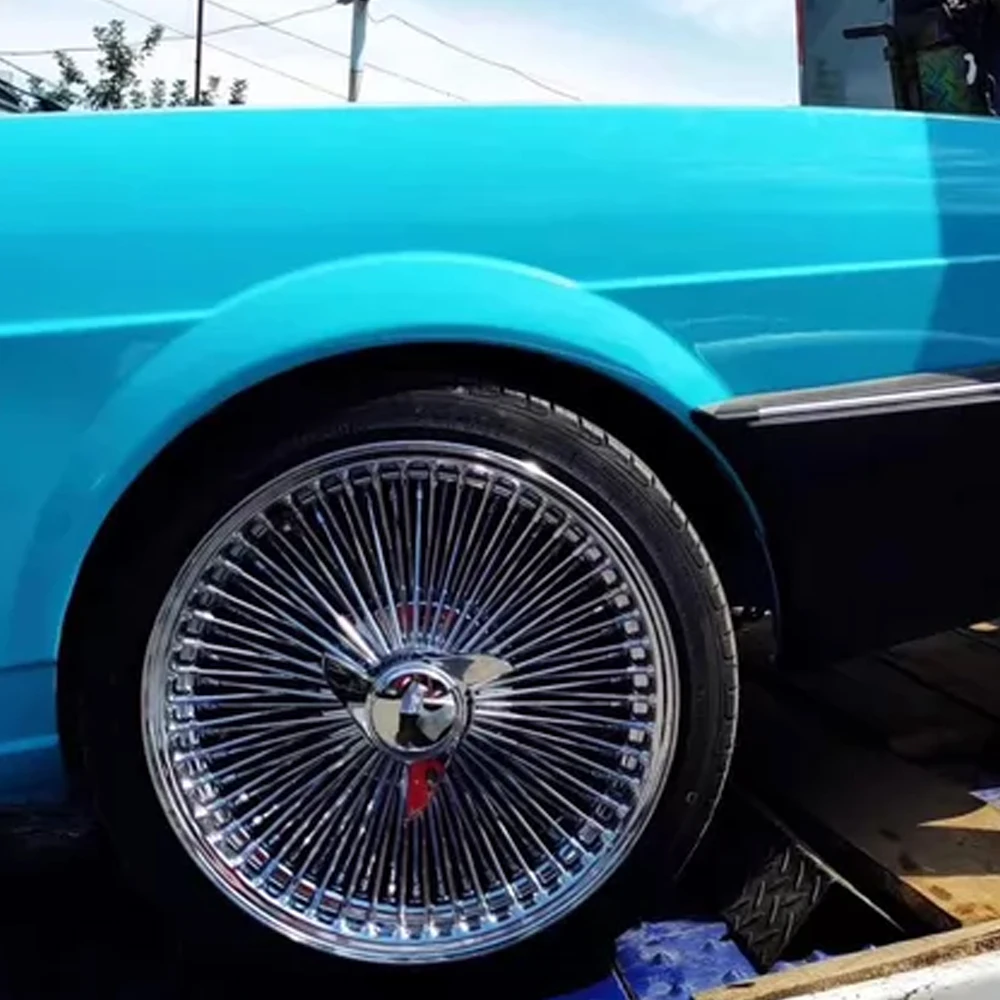
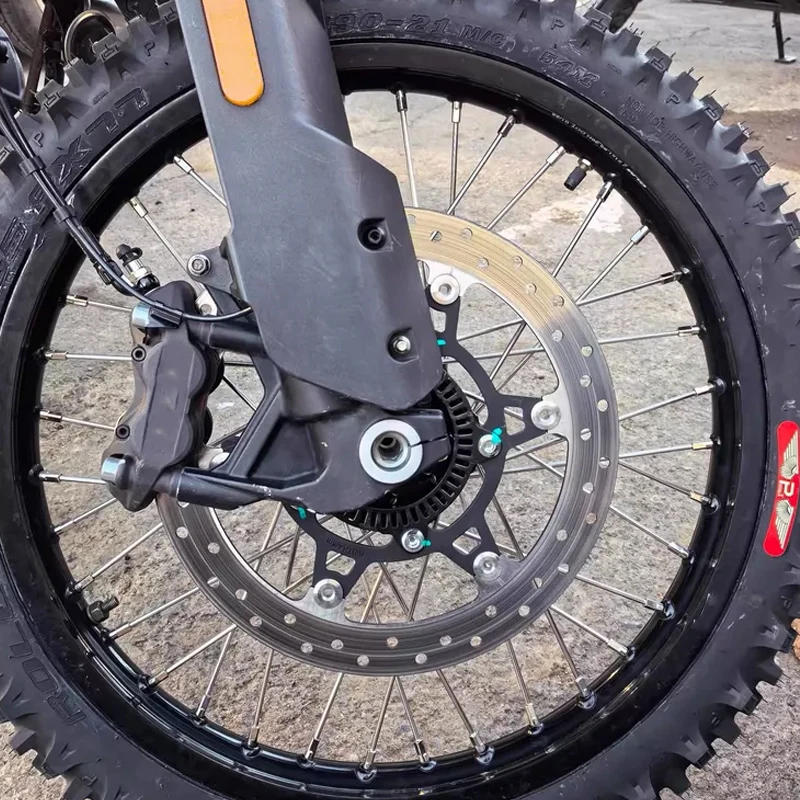
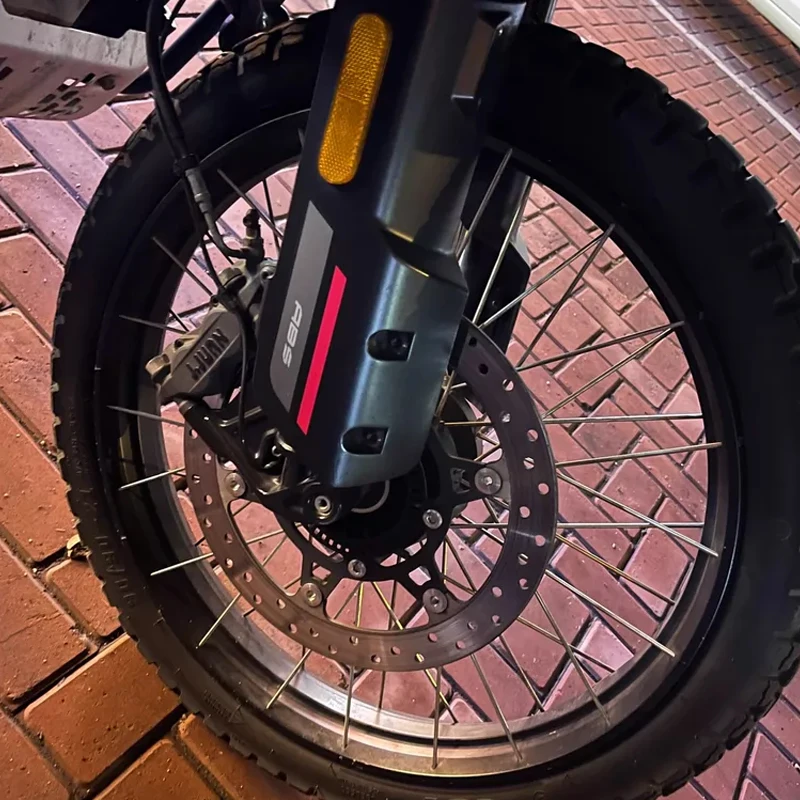
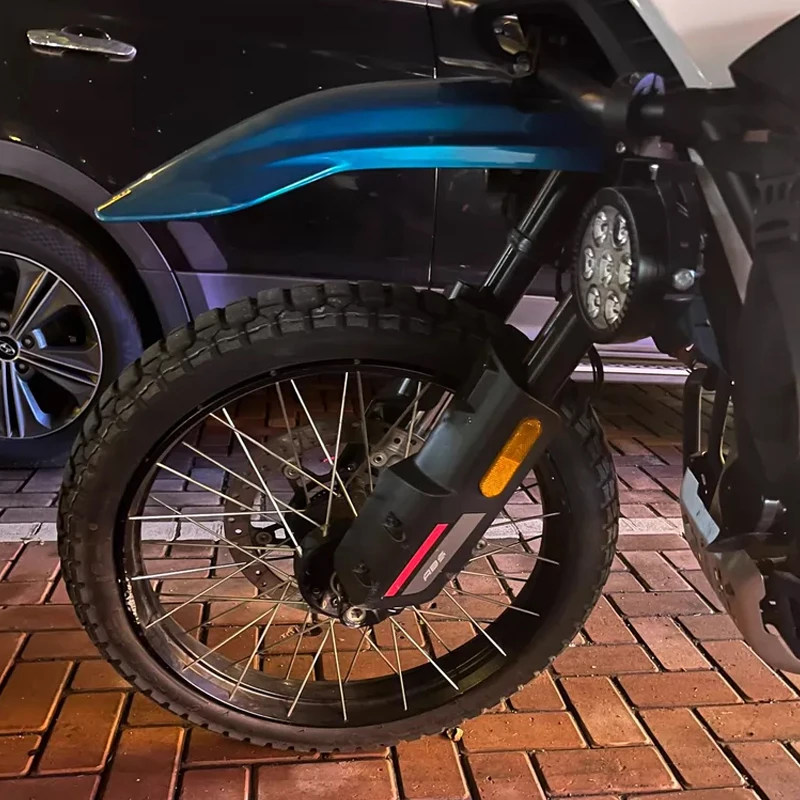
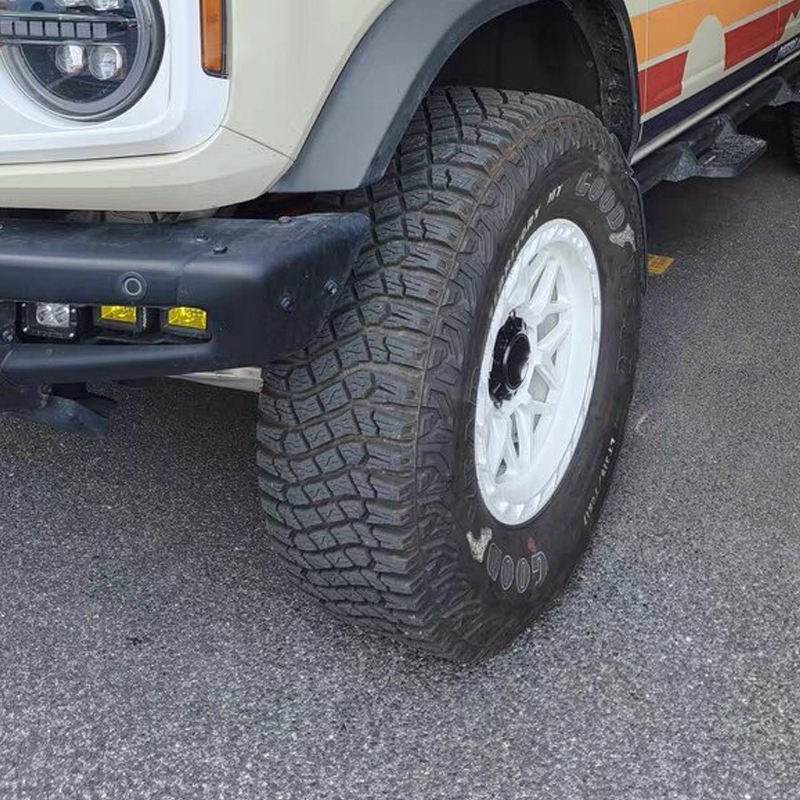
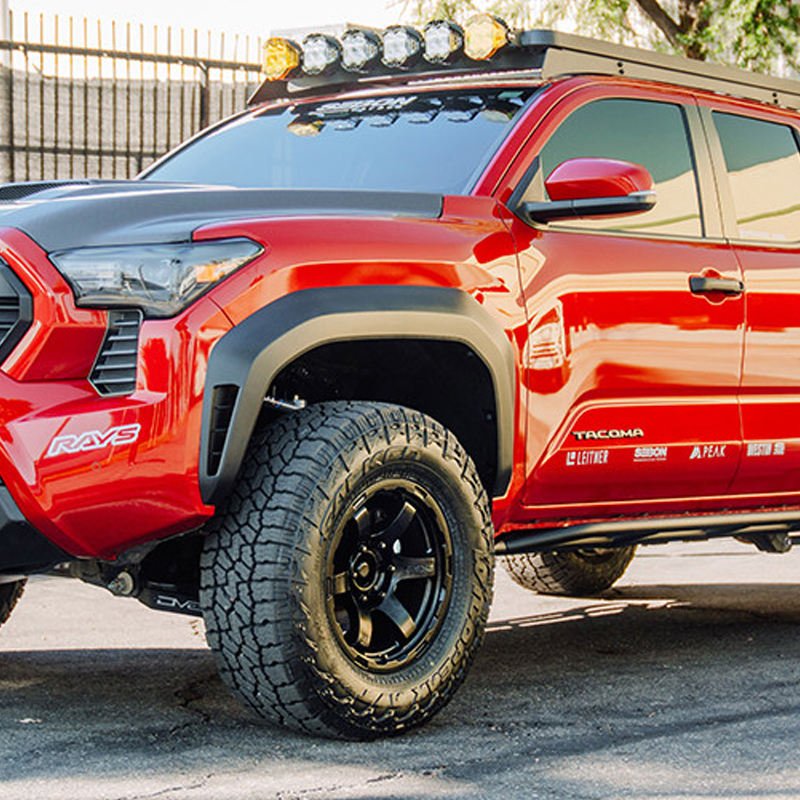
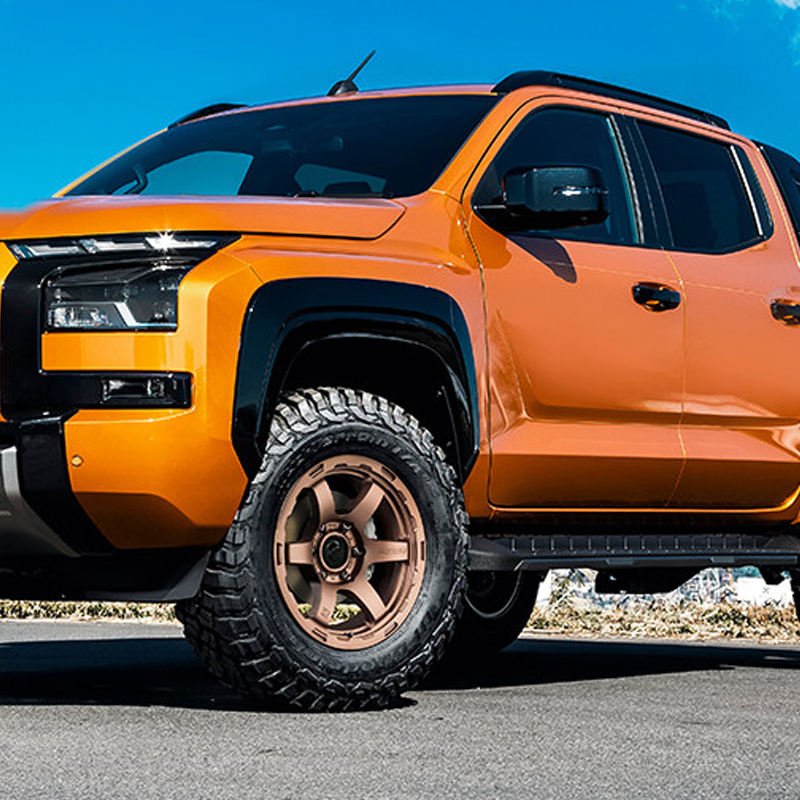
Short answer: a wheel spec line such as 20×9.0J ET35 5×112 CB66.6 contains five separate decisions, not one. Diameter and width set the look and the tire choice; offset (ET) decides whether the wheel clears the suspension and the fender; PCD decides whether it bolts onto the hub at all; and the center bore decides whether it runs true or shakes at speed. Read them before you compare prices.
The full spec line, decoded
Most wheel factories quote fitment in the same shorthand. What each part means, and what goes wrong:
| Term | What it means | Example | If it is wrong |
|---|---|---|---|
| Diameter | Bead seat diameter, in inches | 20 in | Tire will not seat |
| Width | Bead-to-bead rim width in inches (J = bead seat profile) | 9.0J | Sidewall stretch; rubbing |
| Offset (ET) | mm from the wheel centerline to the hub mounting pad | ET35 | Rubs suspension or fender |
| PCD | Stud count + stud-circle diameter, in mm | 5×112 | Will not bolt on |
| Center bore (CB) | Machined hole that centers the wheel on the hub | CB66.6 | Vibration at speed |
| Load rating | Max load per wheel, as a load index | Index 102 | Load safety risk |
Read it left to right: 20×9.0J ET35 5×112 CB66.6 is a 20-inch wheel, 9.0 inches wide, 35 mm positive offset, five studs on a 112 mm circle, 66.6 mm center bore. If a quotation gives only the diameter, ask for the rest — a wheel without a full spec line cannot be checked against your vehicle.
PCD: the pattern that decides whether it bolts on
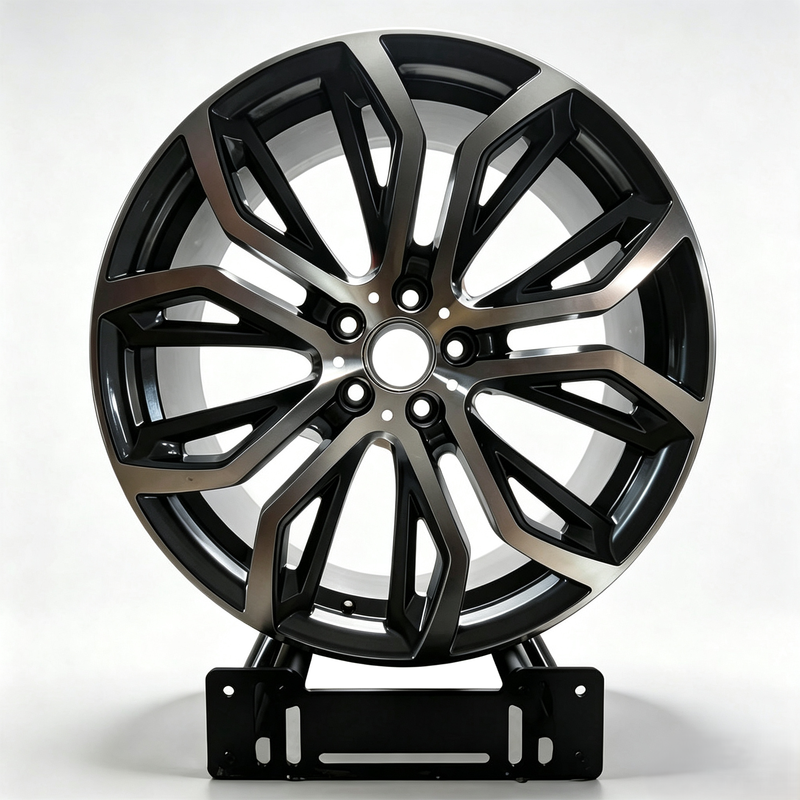
PCD (pitch circle diameter) is written as two numbers. In 5×112, the first is the stud count and the second is the diameter of the invisible circle their centers sit on, in millimetres. Four- and five-stud patterns dominate passenger cars, six-stud patterns are common on off-road trucks, and eight-stud patterns appear on heavy trucks and buses — see our truck & bus wheels.
Patterns commonly quoted include 4×100, 4×10⁸, 5×10⁸, 5×112, 5×114.3, 5×120, 5×127, 6×139.7 and 8×165.1. One pair deserves care: 5×112 and 5×114.3 differ by only 2.3 mm on the stud circle. Lug holes can appear to line up and the nuts may even start threading, but the wheel never seats concentrically — it will vibrate and eventually damage the studs. Never substitute one for the other.
Measure the hub, not the brochure
Vehicle databases are organized by model families, and regional variants can carry different PCDs. On a four-stud hub, measure center-to-center across opposite studs — that distance is the PCD. On a five-stud hub there is no opposite stud, so measure two adjacent studs and convert with a PCD chart. Confirm the thread pitch too — M12x1.5, M14x1.25 and M14x1.5 are common — since the hardware must match both hub and wheel seat.
Offset (ET): what pushes the wheel in or out
Offset is the distance in millimetres between the wheel’s hub mounting pad and its true centerline. Positive ET puts the pad outboard of the centerline, so the wheel tucks inward toward the suspension — most modern passenger fitments run ET30–ET45. Zero ET puts the pad on the centerline. Negative ET puts it inboard, so the wheel pushes outward, which is the look most deep-dish off-road and classic builds use.
Every 5 mm of offset change moves the outer face roughly 5 mm in or out, with the inner barrel moving the opposite way — which is why a set that looked fine on a display car can rub a strut or brake line on yours. The commonly quoted rule of thumb for width: adding about 10 mm of rim width at the same offset moves the inner edge roughly 5 mm inward and the outer edge roughly 5 mm outward.
How to check offset before you order
- Find the stock ET stamped on the back of your current wheels.
- Note your clearance — or lack of it — at full lock and full compression.
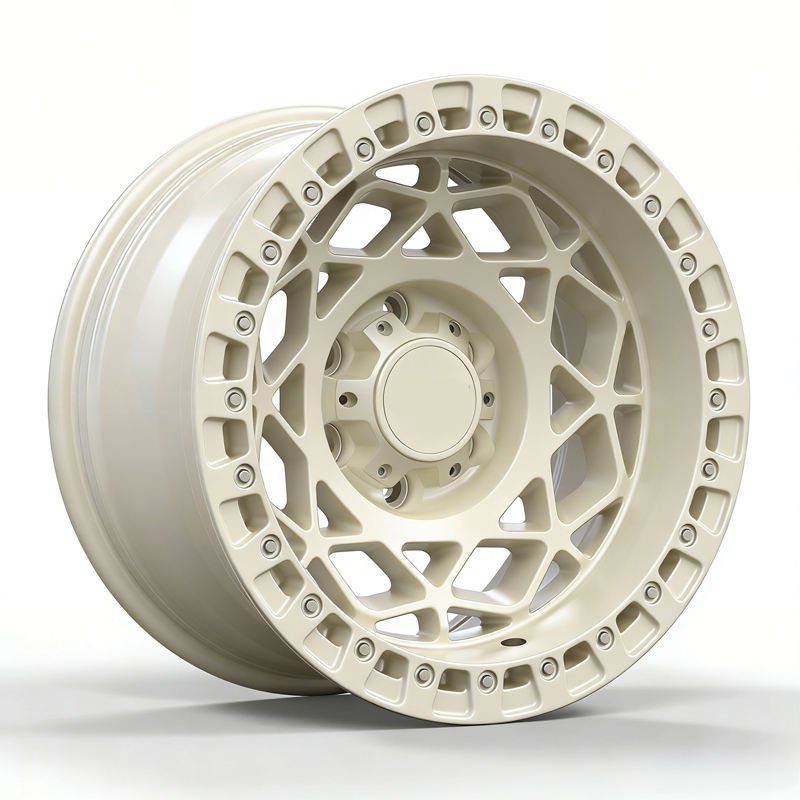
- Ask for a wheel drawing showing diameter, width, ET and barrel profile — our forged wheels are machined to order, so the drawing is confirmed before production.
Center bore: the number that decides whether it shakes
The center bore is the large machined hole in the middle of the wheel. When it matches the hub’s raised pilot, the wheel is hub-centric — the hub carries the load and the lug bolts only clamp. When the bore is larger, the wheel is lug-centric and centering depends entirely on the lugs, which is why unevenly torqued hardware shows up as vibration.
The fix for an oversized bore is a spigot (hub centric) ring that fills the gap:
- Bigger bore + correct ring = fine. A 73.1 mm bore on a 66.6 mm hub takes a 73.1-to-66.6 ring and runs true.
- Smaller bore = does not fit. Never machine a wheel’s bore larger to force it on; the material around the bore is part of the load path. Order the correct bore — custom forged wheels are machined to the exact diameter from the start.
Aftermarket wheels are commonly quoted with a universal 73.1 mm bore so one casting fits many hubs. That is acceptable with rings, specified in the quotation. On motorsport and heavy-load builds we prefer a near-exact bore with no ring at all — fewer parts, fewer failure points.
Width, diameter and the tire that goes on it
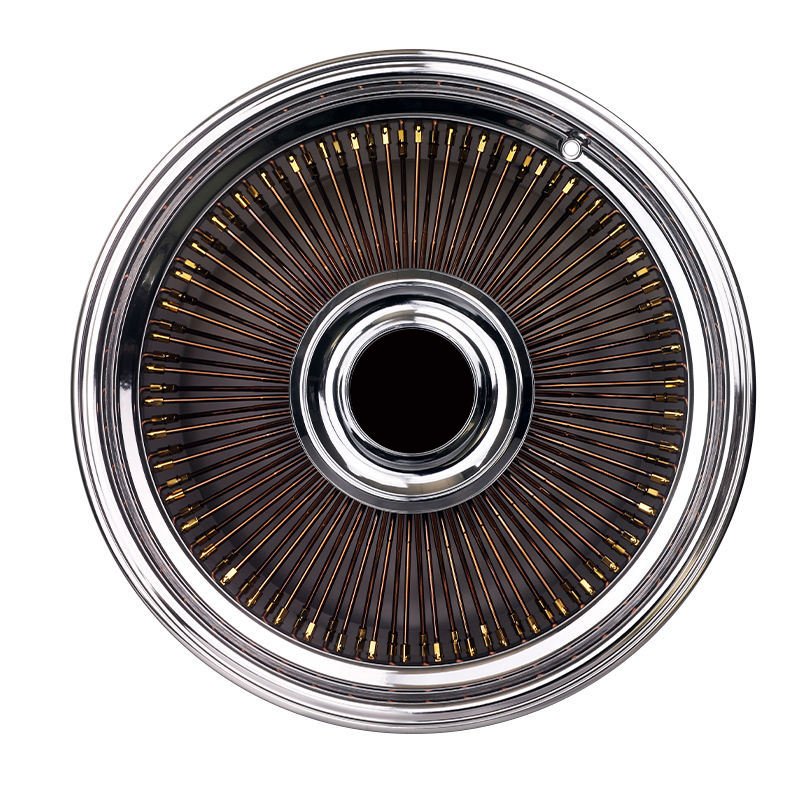
Commonly quoted pairings: a 225–235 section tire suits an 8.0–8.5J rim, a 245–265 section suits 8.5–9.5J. Keep the combined rolling diameter within about 2–3% of stock so speedometer, gearing and ABS references stay valid — our tire category lists the sizes we stock with wheel sets.
Load rating and test marks
Every wheel should carry a load rating adequate for the heaviest corner of the vehicle when fully loaded — typically the rear axle on vans and pickups. Check the load index cast on the wheel, which must match or exceed the vehicle manufacturer’s requirement, and the test standard the batch was built to: JWL and VIA (Japan market), TÜV-related approvals (Germany and much of Europe) or an equivalent. Ask for the batch report — for carbon fiber wheels, that documentation is part of a professional quotation.
FAQ
Can I fit 5×114.3 wheels on a 5×112 hub?
No. The stud circles differ by 2.3 mm, so the wheel never seats concentrically. Wobble lugs exist but are a workaround, not a fitment.
How much offset change is safe?
About 5 mm from stock is commonly quoted as a starting point when width is unchanged. Beyond that, verify with the wheel drawing and a test fit first.
Do I need hub centric rings?
If the wheel’s center bore is larger than the hub pilot, yes — specify them with the order. If the bore matches the hub, no ring is needed.
Send us your spec line and we will check it
Send the vehicle model, year and chassis code; your current wheel and tire sizes or the quoted spec line; and a photo of the car, plus the caliper if you run big brakes. Message us on WhatsApp at +852 55709471 (wa.me/85255709471), email info@tuhaoauto.com, or use the form on our contact page. TH Wheels machines the bore, offset and PCD into every wheel we ship — send the numbers first, and the set bolts on the first time.
Related on this site: wire spoke wheels · off-road motorcycle spoke rims · carbon fiber wheels