

Short answer: spoke wheels remain the default choice for off-road and supermoto conversions because spokes absorb impact that would crack a cast rim. Whether you can run them tubeless depends entirely on how the rim seals — a rubber band inside the rim, a sealed rim bed with gaskets at each nipple, or a factory-sealed spoke rim. And before any of that, rim width is the specification that decides which tires you can actually mount. This guide walks through all three decisions in the order a workshop should make them.

Why Spoke Wheels Still Dominate Off-Road and Supermoto Builds
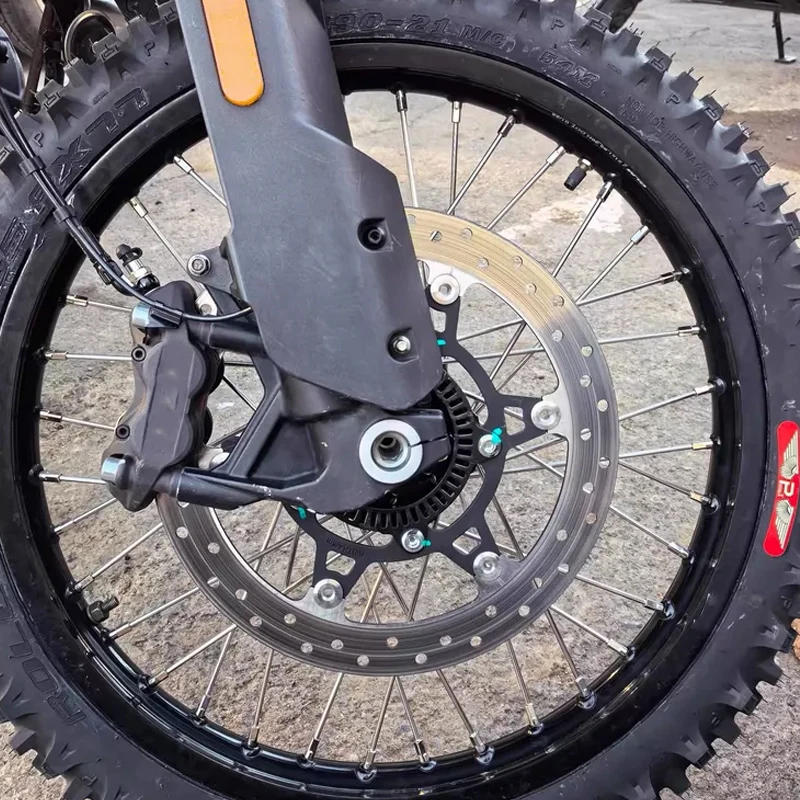
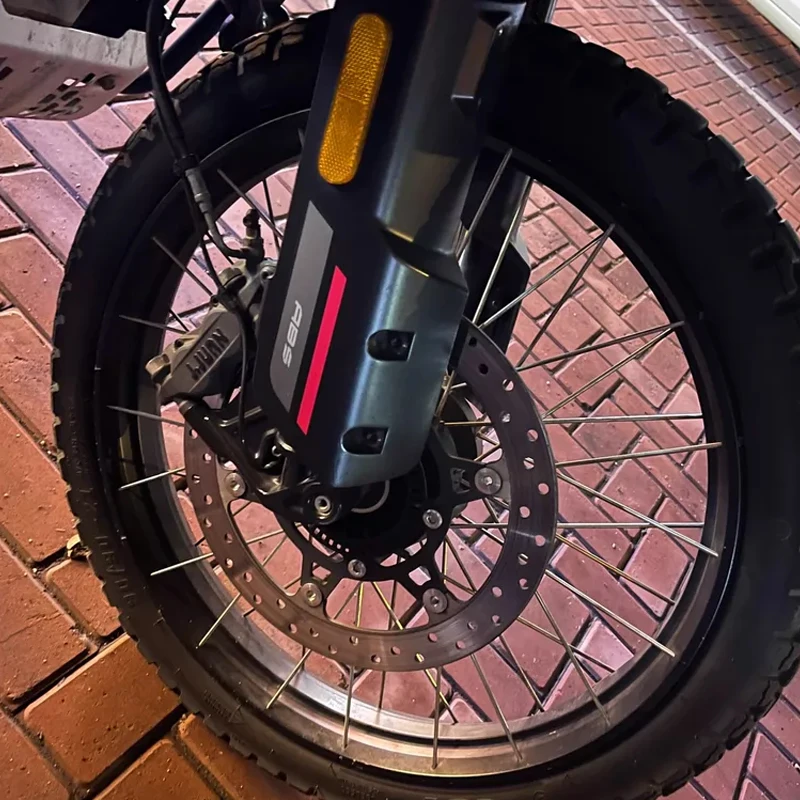
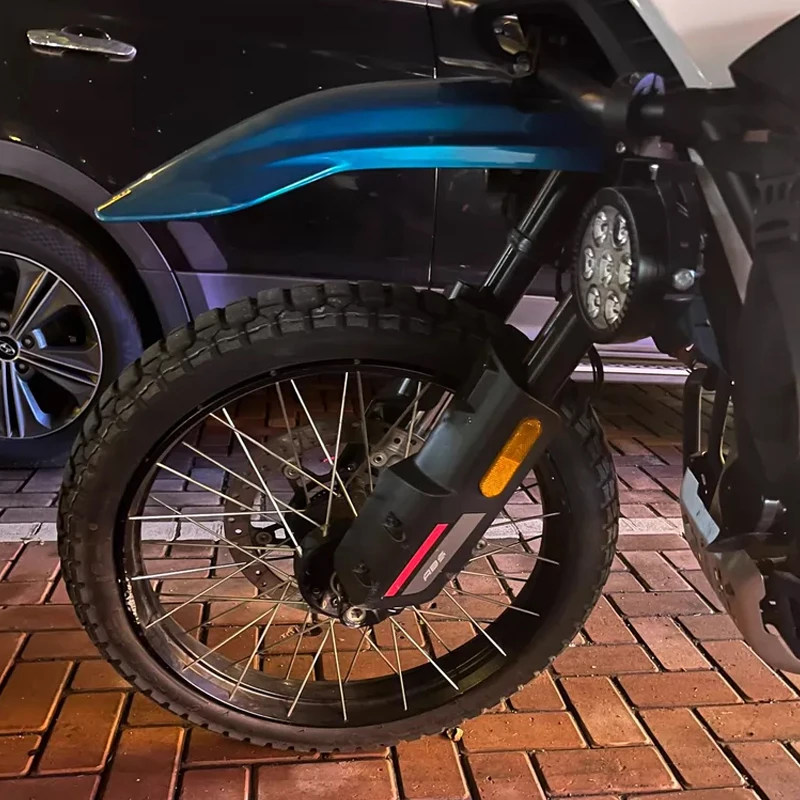
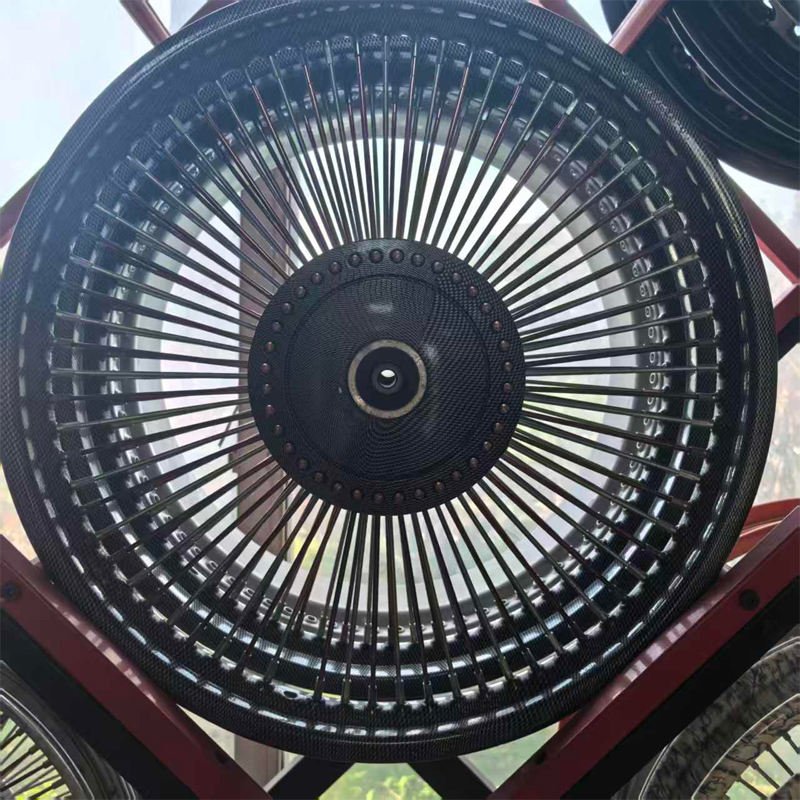
Off-road and supermoto motorcycles generate point loads that cast and forged one-piece road wheels are not designed to survive: square-edged rocks, potholes at speed, landings slightly off-line. A laced spoke wheel distributes those loads through 32 or 36 tensioned stainless steel spokes into the hub, and a bent spoke rim can usually be trued back into service instead of replaced.
For workshops and B2B buyers, this matters commercially too. Spoke wheel sets are serviceable, re-laceable and customizable — hub color, rim color, spoke gauge and rim width can all be specified per order. That is why dirt bike conversions and street-legal supermoto builds almost always start from a laced wheel set rather than a cast one.
Tube-Type Spoke Wheels: How They Work and Where They Win
In a traditional laced wheel, spoke nipples pass through drilled holes in the rim well. Those holes are open to the air chamber, so the tire must hold air with an inner tube. The tube is not structural — the carcass carries the load — but it is the pressure boundary.
Typical tube-type specifications on off-road and supermoto wheels:
| Specification | Typical value (commonly quoted) |
| Rim material | Forged or extruded 6061-T6 aluminum |
| Front rim (off-road) | 21 x 1.60 in or 21 x 1.85 in |
| Rear rim (off-road) | 18 x 2.15 in or 18 x 2.50 in |
| Front rim (supermoto) | 17 x 3.50 in |
| Rear rim (supermoto) | 17 x 4.25 – 17 x 5.00 in |
| Spokes | 32 or 36 pcs, stainless steel, 7 mm heavy-duty gauge common |
| Nipples | Brass or aluminum, square-drive heads preferred for truing |
Tube-type advantages: proven construction, easy field repair (a new tube fixes most punctures), lower rim cost, and tolerance for lower manufacturing precision at the rim well. Disadvantages: an extra rotating component, slightly higher unsprung weight, and pinched tubes during hard mounting or low-pressure off-road riding.
Tubeless Spoke Wheels: Sealing Systems Explained
A tubeless spoke wheel only works if the air chamber between the rim well and the tire bead is airtight. There are three ways that is commonly achieved, and buyers should always ask which one a supplier uses:
1. Rubber sealing band (rim strip conversion)
A continuous rubber band is laid over the nipple area inside the rim, and the tubeless valve stem clamps through it. This is the least expensive route and works acceptably at road pressures, but the band can shift during truing or spoke replacement, and slow leaks at the valve hole are the most common complaint.
2. Sealed rim bed with spoke gaskets
The rim is machined or extruded with a sealed base, and each nipple passes through an individual rubber gasket or O-ring. This is the standard approach on purpose-built tubeless spoke rims. It survives spoke service better than a band, because each nipple keeps its own seal when tightened.
3. Factory-sealed rim
The rim well is sealed at manufacture (welded or bonded in the spoke area), so no post-assembly sealing is needed. This offers the best long-term reliability but limits how far the wheel can be re-trued before the seal is disturbed.
For any tubeless build, also confirm the valve stem type (clamp-in preferred over snap-in for higher pressures), bead seat condition, and that the tires fitted are explicitly approved for tubeless use.
Tube vs Tubeless at a Glance
| Factor | Tube-type spoke wheel | Tubeless spoke wheel |
| Puncture repair | Replace tube roadside | Plug kit roadside, where tire design allows |
| Air loss rate | Sudden if tube pinches | Gradual slow leak typical |
| Rim cost | Lower | Higher (sealed bed and gaskets) |
| Spoke service | Fully re-laceable | Re-laceable on gasket systems; limited on factory-sealed rims |
| Off-road low pressures | Higher pinch-flat risk | Better tolerance, if tire approved |
| Street / supermoto use | Works well | Often preferred for pressure stability |
| Typical failure point | Pinched tube at bead | Valve hole or band shift |
Rim Width: The Spec That Limits Your Tire Choice
Rim width, expressed in inches after the diameter (17 x 3.50 J, for example), determines which tire sections mount correctly and safely. Every tire maker publishes an approved rim width range for each tire size — mounting a tire outside that range is a safety issue, not a style choice.
Commonly quoted pairings for supermoto conversions:
| Rim size | Commonly paired tire section | Typical use |
| 17 x 3.50 in (front) | 110/70-17 or 120/70-17 | Supermoto front |
| 17 x 4.25 in (rear) | 130/70-17 – 140/70-17 | Street-biased supermoto rear |
| 17 x 4.50 in (rear) | 150/60-17 | Wider street supermoto rear |
| 17 x 5.00 in (rear) | 160/60-17 | Maximum-width street builds |
| 21 x 1.60 in (front) | 80/100-21 | Off-road enduro front |
| 18 x 2.50 in (rear) | 110/100-18 – 120/90-18 | Off-road enduro rear |
Two practical checks before ordering: first, confirm the tire sections you plan to run are approved for that rim width by the tire manufacturer’s fitment chart; second, confirm swingarm clearance at full suspension compression, because a wider rear rim plus a wider tire changes the effective width more than most buyers expect.
Spokes, Hubs and the Details Buyers Forget
- Spoke count and gauge: 32 spokes is common on supermoto front wheels; 36 spokes on rear and heavy-duty sets. Heavier gauge (7 mm) spokes trade a little weight for impact reserve.
- Hub interface: confirm axle diameter, brake disc bolt pattern (bolt circle and pilot diameter), and rear sprocket mounting and cushion layout against your bike before ordering a set. These are the details that decide whether a wheel set bolts on or needs machining.
- Truing and torque: a newly laced wheel should be trued within roughly 1 mm lateral and radial runout (commonly quoted target), then re-checked after the first few rides, because spokes seat and lose some initial tension. Always follow the supplier’s torque specification for the nipple type fitted.
- Pressure behavior: tubeless setups reward frequent pressure checks early on; a slow leak at the valve is a maintenance item, not a defect, and is fixed by reseating the valve.
Building a Supermoto Setup: A Practical Checklist
- Confirm axle diameter, disc bolt pattern and sprocket carrier for both ends.
- Choose rim sizes: 17 x 3.50 front and 17 x 4.25–5.00 rear are the common street-supermoto range.
- Decide tube or tubeless based on where the bike will actually ride — pure street favors tubeless; mixed duty favors tube-type for simplicity.
- Match tires to rim width per the manufacturer’s chart, not by eye.
- Plan for a truing check after the first rides, and keep spoke torque on the maintenance schedule.
How TH Wheels Builds Motorcycle Spoke Wheels
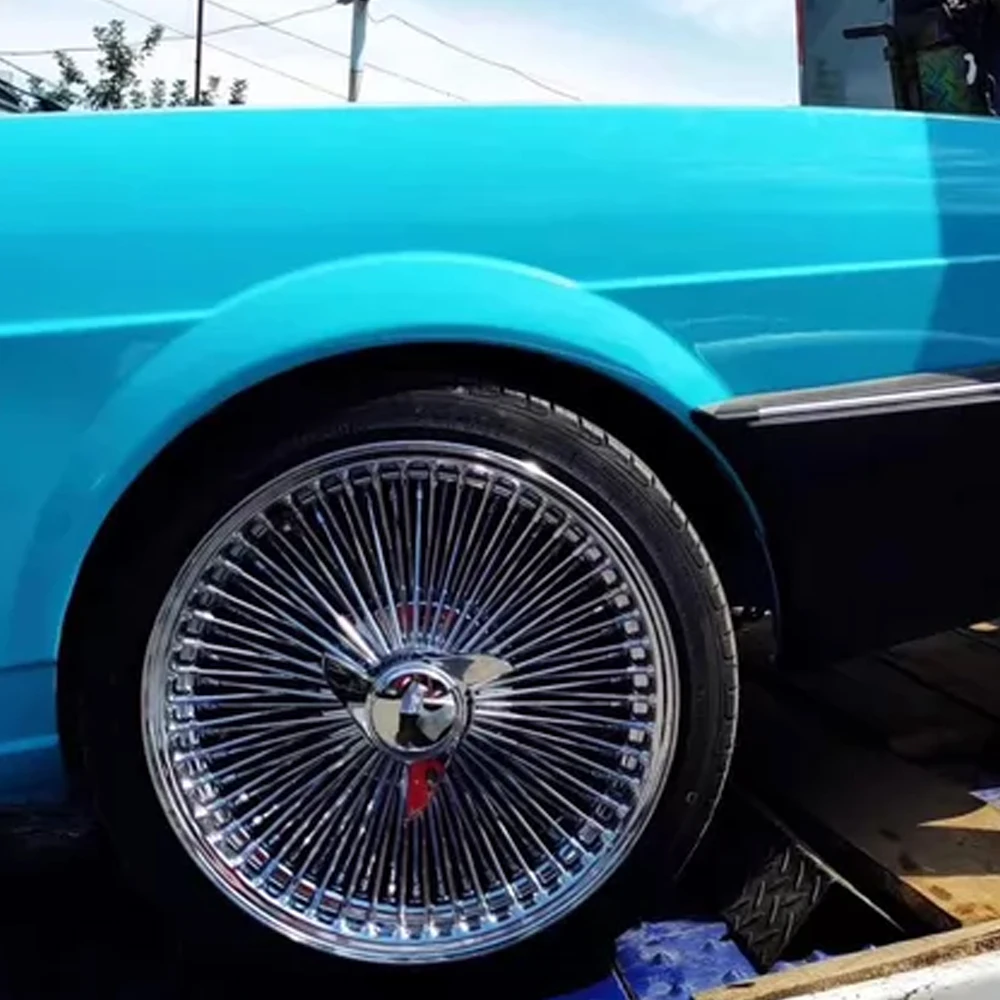
TH Wheels produces laced motorcycle wheel sets with forged 6061-T6 aluminum rims, stainless steel spokes and CNC-machined hubs, offered in both tube-type and tubeless-sealed configurations. Rim widths, hub colors, spoke gauge and anodized finishes are specified per order for dirt bike conversions, supermoto builds and custom cruiser projects. Browse the off-road motorcycle spoke rims category, the carbon fiber wheel options for ultra-light builds, or the tire category to plan a complete rolling package. Classic builds can also reference our spoke wheel range for vintage-style applications.
Get a Fitment-Checked Quote
Send us your axle diameter, disc bolt pattern, rim sizes and intended use, and our engineers will confirm compatibility before production — including tubeless sealing options and tire-width matching.
- WhatsApp: +852 55709471 (https://wa.me/85255709471)
- Email: info@tuhaoauto.com
- Contact page: https://tuhaoauto.com/contacts/